
In a normal Maryland sale, most of the cost comes out of the seller's side: agent commissions, a share of the closing costs and taxes, repairs, and the money a house quietly spends while it waits to sell. Here is the whole picture, laid out plainly, so nothing surprises you at the table.
A sale price is not what you keep. These are the costs a traditional sale takes out before the rest reaches you, with real ranges and no hand-waving.
The largest single cost, historically split between the seller's and buyer's agents. On a $300,000 home, that is roughly $15,000 to $18,000.
Title fees, settlement and attorney fees, document prep, and any buyer credits you agree to at the table. Smaller than commission, but real.
Maryland's state and county taxes on the sale, commonly split with the buyer. Your share depends on your county and what you negotiate. (More on these below.)
Paint, fixes, cleaning, staging, and anything a buyer's inspection turns up. This comes out of your pocket before the home ever sells, and it adds up fast.
Every month on the market, the house keeps spending: mortgage, property taxes, insurance, and utilities. A slow sale quietly eats the difference.
Add it up and a typical sale commonly takes 8 to 10 percent or more off the top, before a dollar reaches you.
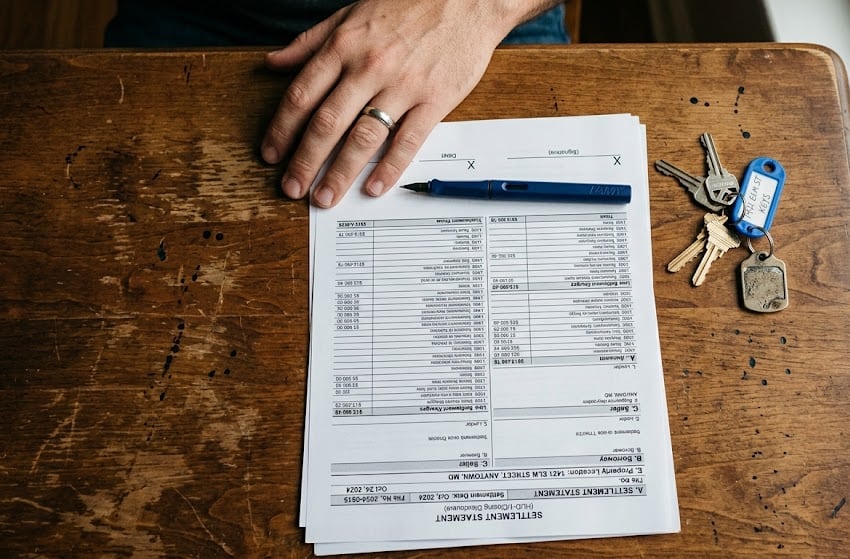
Two state-and-county taxes apply to nearly every Maryland sale. They are usually split between buyer and seller, but who pays what is negotiable and is spelled out in your contract.
Maryland charges one half of one percent of the sale price. First-time Maryland buyers get a reduced rate, and that portion is customarily paid by the seller.
Each county sets its own rate on top of the state tax. Baltimore City and County add their own percentage, which is why your exact cost depends on where the home is.
A tax charged per $500 of the home's value to record the deed. The rate is set by the county and, like the others, is commonly split at settlement.
Rates change and every contract is different. Treat these as the plain-English shape of it, not tax advice, and confirm your numbers with your settlement company.
A cash offer is usually a little lower than a perfect, fully-renovated listing price. The honest question is what reaches you after the costs come out. Here is the same sale, both ways.
We will never pretend a lower offer is a higher one. When we present a number, we show you the comparable sales and the repair math behind it, and if listing with an agent would truly net you more, we will tell you so.
For most people selling the home they live in, the answer is no. If you owned and lived in the house for at least two of the last five years, you can exclude up to $250,000 of gain if you are single, or up to $500,000 if you are married filing jointly. Most home sales fall comfortably under that.
Gains above the exclusion, or the sale of an investment or inherited property, can be taxable. It is worth a short conversation with a tax professional about your specific situation. If you inherited the home, our resources page points you to plain-English help on probate and what to expect.
In a traditional Maryland sale, the seller usually pays the agent commissions and a share of the closing costs, and the buyer pays their own. Transfer and recordation taxes are commonly split between buyer and seller, though that is negotiable. When you sell directly to Deep Roots REI, we cover the closing costs and there are no commissions, so the offer you accept is what you walk away with, minus any existing mortgage or liens.
Between agent commissions of roughly 5 to 6 percent, seller-paid closing costs of about 1 to 3 percent, your share of Maryland transfer and recordation taxes, plus any repairs and the carrying costs while the home sits, a traditional sale commonly takes 8 to 10 percent or more off the top. The exact figure depends on your price, your county, and the condition of the home.
Agent commissions typically run about 5 to 6 percent of the sale price, historically split between the seller's agent and the buyer's agent. On a $300,000 home that is roughly $15,000 to $18,000. Commissions are negotiable, and selling directly to a cash buyer removes them entirely.
Maryland charges a state transfer tax of 0.5 percent of the sale price, plus a county transfer tax that varies by county, and a recordation tax charged per $500 of value. These are commonly split between buyer and seller, but who pays what is negotiable and is spelled out in your contract. First-time Maryland buyers get a reduced state rate.
Most people who sell their primary home owe no capital gains tax. If you owned and lived in the home for at least two of the last five years, you can exclude up to $250,000 of gain if you are single, or up to $500,000 if you are married filing jointly. Gains above that, or sales of an investment or inherited property, can be taxable, so it is worth asking a tax professional about your specific situation.
We cover the standard closing costs, charge no commissions, and buy the home as-is, so you make no repairs and do no cleanup. The number we agree on is the number you walk away with, minus any mortgage payoff or liens on the property. We show you the math behind the offer so it never feels like a mystery.
Tell us a little about your house and we'll put together a free, no-obligation breakdown of what you would really walk away with, both ways, so you can decide with the real numbers in front of you. From a local neighbor, not a call center.
We'll respond personally, usually within 24 hours.